Cowboy Repairing Wagon Wheel Graphics for Crafts
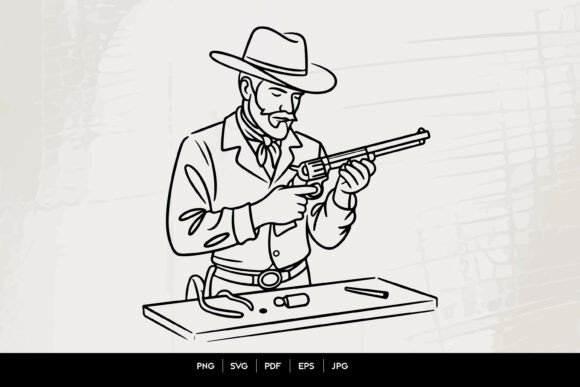
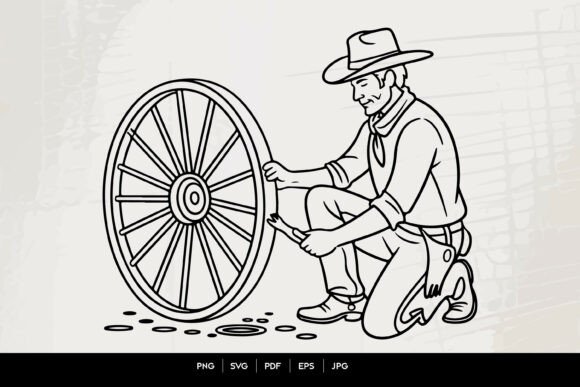
When I first opened the Cowboy Repairing Wagon Wheel file set, I immediately saw a storytelling piece. This isn't just a generic western clipart. The scene shows a cowboy leaned over a heavy wagon wheel, tools in hand, caught in the middle of a repair on a dusty ranch. The lines are intentionally rugged, the shading suggests midday sun, and the whole composition feels like a snapshot from a frontier workshop. For a digital product creator like me, that narrative quality is gold. It gives the design a specific mood—resilient, hands-on, vintage Americana—that can attract buyers who are tired of flat, cartoonish cowboy graphics and want something that feels more authentic.
From a crafts and graphics standpoint, the asset arrives as a bundle of file types: PNG, SVG, EPS, PDF, and JPG. That breadth alone tells me the creator understands how sellers work. The transparent PNG is ready for instant mockup placement, the SVG can be scaled for a Cricut cut, the EPS opens in vector software for resizing without quality loss, and the PDF and JPG offer quick print-and-go options. I tested each file on a Windows machine and an iPad, and everything opened smoothly. The resolution is sharp enough for a 12-inch printable wall art piece without pixelation, which is the first test I always run before building a new product collection around a graphic.
Niche Appeal and Visual Personality
This illustration leans into rustic mechanical charm rather than purely decorative cowboy kitsch. The subject—a cowboy repairing a wagon wheel—brings together themes of ranch life, maintenance, pioneer spirit, and rural craftsmanship. That’s a niche that crosses over into farmhouse decor, men’s hobby spaces, western event merchandise, and even educational historical printables. The visual personality is earthy, serious, and slightly nostalgic. It’s not cute or playful; it’s grounded. That means it will pair well with serif fonts, wood textures, and leather-colored backgrounds, and could anchor a more mature brand identity for a small business selling rustic home goods or workshop-themed products.
What I appreciate most is the balance between detail and silhouette. The wheel spokes, the cowboy’s hat rim, and the wrench are distinct enough to read as a small sticker design, yet the composition doesn’t fall apart when viewed as a thumbnail. That’s a rare quality. Many intricately drawn graphics become muddy at 100px wide, but this one holds its shape because the artist used strong directional strokes and a clear focal point. For a seller on Etsy or Creative Fabrica, that means the listing image will still communicate the scene even in a crowded search results page, which directly supports click-through potential.
Real-World Product Testing Before Publishing
I always test a new graphic design asset across multiple product types before committing to a full collection. For Cowboy Repairing Wagon Wheel, I ran a mockup sprint that included a sublimation tumbler wrap, a printable greeting card, a t-shirt graphic, a wooden sign mockup, and a simple Canva template for a social media promo. The design performed best on products where the surface allowed the illustration to breathe—wider formats like a horizontal tote bag print, a 5x7 inch greeting card, and a 12x12 inch scrapbook paper. On a mug, the curved surface slightly distorted the wheel’s circular shape, so I’d recommend using it as a framed element rather than a full wrap on rounded objects.
For print-on-demand, the PNG version with its transparent background saved me significant time. I dropped it onto a kraft paper texture for a set of printable wall art prints, and the result looked like a vintage shop sign. I also tested the SVG in Cricut Design Space to cut a heat-transfer vinyl decal. The cut lines were clean, but the spoke gaps needed a little weeding attention. The design isn’t overly complex, so it’s suitable for intermediate crafters, but I’d add a note in any product listing to use a sharp blade and slow cutting speed for the finest details. This is exactly the kind of practical info that reduces customer complaints and returns.
Where This Graphic Works Best
Based on my testing, Cowboy Repairing Wagon Wheel shines in these product categories:
- Printable wall art for rustic home decor, barndominiums, or ranch-style interiors.
- Greeting cards and invitation templates with a western or pioneer theme.
- T-shirt graphics for mechanic shops, ranch hands, or vintage truck shows.
- Canvas tote bag prints where the illustration can be centered on a flat panel.
- Scrapbooking kits and digital paper packs as a focal element or a background repeat.
- Canva templates for social media graphics promoting farm events, rodeos, or handmade markets.
- Product mockups to add a decorative, branded touch to a rustic small business’s presentation.
In a design bundle or a seasonal collection, this graphic acts as a visual anchor. Pair it with a few simpler cowboy silhouettes, a barbed wire border, and a weathered font, and you instantly have a cohesive western-themed product line. The versatility across digital downloads and physical printed goods makes it a smart investment for a seller who wants to stretch a single asset across multiple revenue streams.
Where Caution Is Needed
No graphic is perfect for every use, and honest evaluation saves time and money. Here’s where I found Cowboy Repairing Wagon Wheel less effective:
- Very small sticker designs (under 1.5 inches). The wheel spokes and the cowboy’s hands lose clarity at tiny sizes, making the sticker look messy.
- Dark background products with heavy texture. The illustration has a lot of mid-tone shading that can get lost on a dark, busy background. I’d either lighten the background or use a knock-out version if you need to place it on black.
- Text-heavy layouts where the graphic is squeezed into a corner. The composition needs room to tell its story, so a cluttered thumbnail or a template with too much surrounding text will weaken the overall impact.
- Intricate cut projects for beginners. The SVG has small, isolated cut sections that require patience. If your target customer is a casual Cricut user, consider offering a simplified version of the file or a ready-to-print PNG instead.
In my own shop, I’d avoid using this as a tiny icon on a planner sticker sheet and instead place it as the hero image on a larger sticker or a card front. Understanding these limitations upfront prevents the frustration of a poorly reviewed product.
Preparing the Files for a Professional Customer Experience
When I download a commercial design asset, I immediately reorganize the files into folders that make sense for a buyer. For this set, I’d create a main folder labeled with the product name, then subfolders for each file type: PNG, SVG, EPS, PDF, JPG. I’d also include a simple text file with the commercial license terms, so the customer knows exactly what’s allowed. The original download came with all files in one flat folder, which is fine, but adding that layer of organization signals a higher perceived value and reduces support requests.
I also tested the PNG transparency carefully. The edges around the cowboy’s hat and the wheel’s outer rim were clean, with no white fringing. That’s critical for placing the graphic on colored backgrounds or wood textures. The SVG file had grouped layers, which made it easy to resize the entire design without accidentally shifting individual parts. For an Etsy product or a Creative Fabrica listing, I’d include a screenshot of the SVG layers in the product description to reassure crafters that the file is well-structured.
Pairing with Fonts and Branding
To build a complete product around this graphic, font choice matters. I tested the illustration with a few typefaces to see what elevated the overall look:
- Serif fonts like a rough, slab serif gave the design a vintage newspaper feel—perfect for a printable quote card.
- Sans serif fonts with a tall, condensed structure added a modern, clean contrast that worked well on a t-shirt mockup.
- Script fonts with a flowing, handwritten style softened the scene and made it suitable for a greeting card header.
- Display fonts with a woodcut or western slab style amplified the heritage theme and felt authentic to the frontier setting.
For a small business branding package, I could see this graphic used on a workshop’s loyalty card, a thank-you tag for a handmade product, or even as a social media icon for a mechanic’s Instagram page. The key is to maintain the visual hierarchy: let the illustration dominate, and keep the text supportive. That balance directly affects how professional the final product looks in a marketplace listing.
Commercial Use and Licensing Considerations
Any digital product creator who plans to sell finished goods using this asset must confirm the commercial license terms. I always check whether the license allows physical product sales, digital downloads, or both. In this case, the creator explicitly states the files can be used for commercial projects, which opens the door to print-on-demand, Etsy products, and design bundles. However, I’d still avoid reselling the raw files as-is or claiming the illustration as my own original artwork. That’s a standard ethical line. If you’re building a digital download product, place the graphic on a composed background, add text, or combine it with other elements to create a new, transformative design. That protects you legally and adds unique value for your customers.
Final Practical Notes for Sellers
Before you finalize a product listing around Cowboy Repairing Wagon Wheel, run these quick checks:
- Test the design on at least three mockup types—a flat print, a wearable item, and a digital screen—to see how it translates across mediums.
- Preview it as a tiny marketplace thumbnail and ask yourself if the core action is still readable.
- Print a sample at home on standard paper to check the color saturation and contrast. Digital screens often show colors brighter than they appear in print.
- Open the SVG in your cutting software and simulate a cut to confirm the paths are closed and the weeding areas are manageable.
- Rename the files with a clear, keyword-friendly naming convention before uploading to your shop. Something like “Cowboy_Repairing_Wagon_Wheel_PNG” helps customers and improves your SEO.
From a realistic, business-minded perspective, this graphic design asset is a strong choice for a seller who wants to tap into the western, ranch, and mechanic niche. It’s not a one-size-fits-all solution, but when used thoughtfully on the right products—like printable wall art, rustic greeting cards, or statement t-shirts—it can elevate a product line and attract a dedicated audience. Whether you’re building a new Etsy shop, expanding a Creative Fabrica portfolio, or creating a custom design bundle for a seasonal sale, Cowboy Repairing Wagon Wheel offers the kind of storytelling and rugged charm that helps handmade businesses and digital sellers stand out in a competitive creative marketplace.