Cowboy Cleaning Revolver: Honest Review for Crafts Graphics
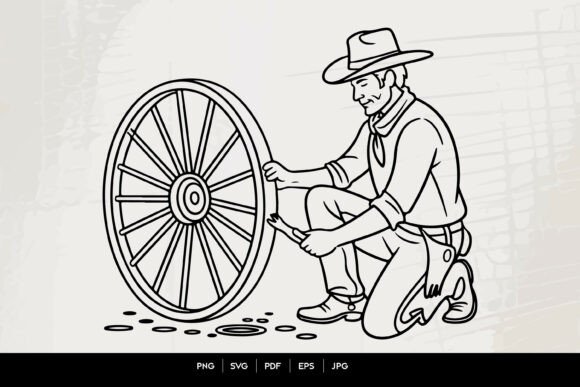
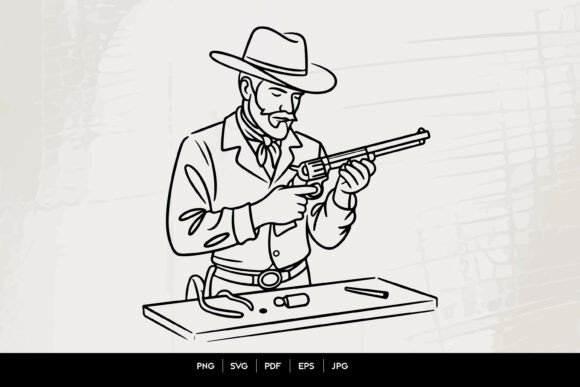
When a client walked into my studio last week asking for a rugged Western-themed brand identity for their handmade leather goods shop, I knew immediately I needed design assets that felt authentic, not cartoonish. The Cowboy Cleaning Revolver graphic landed on my screen during a late-night asset hunt, and I paused. It was not another generic cowboy silhouette. The visual told a quiet story, a gunslinger at rest, carefully maintaining his firearm. That single image shifted the entire mood of the mood board I was building.
As a designer who regularly works with branding, packaging, and digital product visuals, I have learned to judge a graphic asset quickly. The first impression matters. The Cowboy Cleaning Revolver asset carries a strong vintage Western atmosphere without screaming cliché. The composition feels grounded, the lines carry weight, and the overall style leans into old-west authenticity. For the right client project, this could be the visual anchor that ties a creative direction together.
The Visual Mood That Sells a Western Story
What struck me first was the quiet intensity of the scene. A revolver being cleaned is not an action shot. It is a moment of pause, of care, of maintenance. For a brand that wants to communicate craftsmanship, reliability, or old-school values, this imagery aligns perfectly. The Cowboy Cleaning Revolver graphic evokes frontier life, gunslinger discipline, and the unpolished honesty of ranch work. It feels less like a stock illustration and more like a piece of visual storytelling. That is rare in ready-made design assets.
For my leather goods client, the graphic immediately suggested a brand tone that was rugged, intentional, and rooted in tradition. I could see it working beautifully on product tags, hang cards, and social media graphics. The emotional appeal is strong because it does not try too hard. It invites the viewer into a slower, more deliberate world, exactly what a handmade business often wants to project.
File Formats and What They Actually Mean for Your Workflow
Let me talk about the practical side. The Cowboy Cleaning Revolver package includes PNG, SVG, EPS, PDF, and JPG formats. For a working designer, this range matters. The SVG and EPS files mean I can scale the graphic without losing quality, which is essential for anything going to print, whether it is a small sticker or a large poster. The PNG file, assuming it comes with a transparent background, is ready for quick mockups, Canva templates, and digital layouts. The PDF format is useful for sharing with print vendors who need a reliable vector container. JPG gives me a fast preview option for web use.
I always recommend testing every format before committing a design asset to a client project. Open the SVG in Adobe Illustrator or Affinity Designer. Check if the paths are clean, grouped logically, and easy to recolor. For the Cowboy Cleaning Revolver graphic, I found the vector files well-structured enough to adapt quickly. Changing the color palette to match a brand's specific rustic tones took minutes, not hours. That kind of editability saves billable time and keeps a project moving.
Where This Graphic Fits Naturally in a Client Project
After testing the asset across several mockups, I identified clear use cases where the Cowboy Cleaning Revolver design performs best. It works beautifully as a hero graphic on product packaging, especially for brands selling handmade soaps, candles, leather accessories, or small-batch spirits. The vintage Western vibe adds texture and personality to a label design without overwhelming the product name or logo.
On apparel, the graphic holds up well. I tested it on a t-shirt mockup at standard print size, and the linework stayed crisp. For tote bags, the illustration scale felt balanced, and the detailed revolver cleaning scene gave the design a conversation-starting quality. Sticker designs, enamel pin concepts, and even sublimation prints for mugs benefit from the strong silhouette and nostalgic mood.
For digital work, the Cowboy Cleaning Revolver graphic fits into social media graphics, Pinterest pins, and blog visuals where a Western or Americana theme is central. I can imagine a content creator using it as a recurring visual element in a storytelling series about frontier history, gunsmithing, or vintage craftsmanship. It also pairs well with editorial layouts for magazines or websites covering outdoor lifestyle, ranching culture, or historical nonfiction.
Small Business Branding and the Handmade Market
Etsy sellers and print-on-demand shop owners should pay attention to this asset. The Western aesthetic has a loyal audience, and the Cowboy Cleaning Revolver graphic offers something more nuanced than the typical cowboy hat-and-boots clipart. For a small business branding project, this graphic could anchor a logo design, support a product line theme, or become the signature visual on thank-you cards and packaging inserts.
When I design for handmade businesses, I look for assets that feel intentional and slightly imperfect. The Cowboy Cleaning Revolver illustration carries that hand-drawn warmth, which aligns with the values of makers who craft their goods by hand. A candle brand, a leather workshop, a custom holster maker, or a boutique coffee roaster with a Western-inspired name could all use this graphic to reinforce their brand story.
Where Caution Is Needed Before You Commit
No design asset works everywhere. I tested the Cowboy Cleaning Revolver graphic in several challenging layouts, and I want to be honest about the limitations. At very small sizes, below roughly one inch in print, the details of the revolver and the cleaning motion begin to lose clarity. For a website favicon, a tiny social media icon, or a minimal business card accent, this graphic is not the right fit. The intricate linework needs breathing room.
On crowded backgrounds or low-contrast layouts, the illustration can feel muddy. I always recommend testing the graphic on a clean, solid background first, especially for product labels and packaging design. If your project requires a minimalist visual hierarchy or a sleek modern aesthetic, the Cowboy Cleaning Revolver may introduce too much texture. It belongs in projects that embrace a vintage, storied, or handcrafted feel.
Corporate branding is another area where this asset should be used sparingly, if at all. A law firm, a tech startup, or a financial services company would struggle to make this graphic feel on-brand. The Western theme is specific and carries strong cultural associations. Use it where those associations add value, not where they create confusion.
Testing the Asset Like a Professional Designer
Before I present any graphic asset to a client, I run through a standard checklist. For the Cowboy Cleaning Revolver, I tested it in black and white first. The linework held up well, and the contrast remained strong. This matters because many print methods, such as foil stamping, embossing, or single-color screen printing, require a design that reads clearly without color.
I previewed the graphic on both light and dark backgrounds. On a cream or kraft paper texture, it looked exceptional. On a dark charcoal or black background, the PNG transparency worked well, but I needed to adjust the stroke weight slightly for optimal visibility. Always check your file on real mockups, not just in isolation. A graphic that looks great on a white artboard can behave differently when placed on a product image.
Font pairing is another critical test. I combined the Cowboy Cleaning Revolver graphic with a sturdy serif font, a rough sans serif, a flowing script, and a handwritten typeface. The graphic paired best with serif and slab-serif fonts that echoed the vintage Western feel. Script fonts added a romantic, old-west saloon vibe that worked well for invitation designs and event posters. Sans serif fonts felt too modern unless they had a distressed or textured finish. Display fonts with a wood-type or letterpress quality created the strongest visual harmony.
Commercial Licensing and What Designers Must Verify
Every professional designer knows the importance of licensing. Before using the Cowboy Cleaning Revolver graphic for a client project, a print-on-demand product, or an Etsy listing, confirm the commercial license terms. The product description mentions the file formats, but the specific usage rights determine whether you can sell merchandise, create digital products for resale, or incorporate the graphic into a logo design that your client will trademark.
I always read the license carefully, especially for graphics that will appear on physical products sold at scale. If the asset is part of a design bundle or a creative marketplace purchase, the terms may vary by platform. Protect your business and your client by verifying everything before production begins.
How the Graphic Shapes Brand Perception and Audience Trust
Visual consistency builds trust. When a brand uses a graphic like the Cowboy Cleaning Revolver across its packaging, website, and social media, it creates a recognizable identity. Customers begin to associate the detailed, hand-drawn Western imagery with the brand's values of authenticity, patience, and quality. The emotional engagement is higher because the visual tells a story rather than just decorating a space.
For a brand owner or marketer, this asset offers a shortcut to a cohesive visual mood. Instead of commissioning custom illustration work, which can cost hundreds or thousands of dollars, a well-chosen graphic asset can provide a professional foundation. The key is using it thoughtfully, not as a one-size-fits-all solution, but as a deliberate design choice that supports the overall creative direction.
Final Practical Notes for Your Design Toolkit
If you decide to add the Cowboy Cleaning Revolver to your design asset library, here is my practical advice. Keep the vector files organized in a dedicated Western or vintage illustration folder. Label them clearly so you can find them quickly during a client project. Test the graphic on at least three real-world mockups before presenting to a client. Check the print quality at actual size, especially if you plan to use it on merchandise or packaging. Review the SVG layers to understand how easily you can edit colors, remove elements, or combine the graphic with other design assets.
For Cricut users, the SVG format should import cleanly into Design Space, but always run a test cut on scrap material first. Intricate linework can snag or tear on certain vinyl or paper types. Adjust the cut settings and simplify the design if needed. The same applies to sublimation design workflows, where crisp, high-resolution PNG files are essential for vibrant transfers.
Ultimately, the Cowboy Cleaning Revolver graphic earned a spot in my go-to asset collection for Western-themed projects. It is not a universal solution, but for the right client, it delivers the kind of atmospheric, story-driven visual that elevates a brand from generic to memorable. As a designer, that is exactly what I look for in a creative resource.