Cute Deer with Candles Vector Illustrati: A Real-Stitch Review
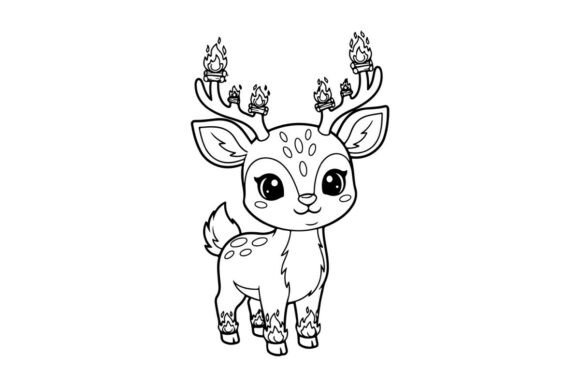
I opened the file with a very specific project in mind. A local boutique had asked me to create a small run of personalized holiday tote bags, and I needed something that felt hand-drawn, gentle, and unmistakably cozy. The moment I saw the Cute Deer with Candles Vector Illustrati, I knew I was looking at a piece that could walk into a craft fair booth and sell itself. It isn’t a loud, flashy graphic. It’s a quiet, carefully balanced illustration that reads like a clean coloring book page, with bold, even line art and a sweet, rustic personality. The deer has a soft, upturned gaze, two simple candles in front of it, and a handful of tiny stars or sparkles floating around. As an embroidery designer, I immediately started mentally tracing the stitch paths and thinking about thread colors. That’s always a good sign.
What makes this vector illustration stand out is its restraint. The line art is deliberately clean, without fragile hairlines or cluttered shading. For anyone who digitizes their own machine embroidery designs, that’s a huge advantage. You can open it in your digitizing software, trace the outlines with a crisp running stitch or a narrow satin stitch, and have a file ready to test in a fraction of the time it takes with overly complex artwork. Even if you don’t digitize yourself, the clear separation of elements means a professional digitizer will turn it into a clean, stitch-friendly embroidery file with minimal editing. The first impression is practical, not just pretty.
The Mood It Puts Into a Finished Product
There’s a calm, storybook quality to this deer-with-candles scene that feels part winter holiday, part everyday comfort. It doesn’t scream “Christmas,” so it doesn’t have a hard expiration date in a shop. You can place it on a sweatshirt, a pillow cover, or a baby blanket and it reads as a symbol of warmth and peace. That’s an underrated superpower for a craft business. When I stitched a sample on a natural linen tote bag, the design held its own without needing a heavy fill. The candles became gentle focal points, and the deer’s face felt expressive even with just a few thread passes. I used a soft caramel brown for the deer, a pale gold for the candle flames, and a deep navy outline on the cream fabric. The contrast was perfect, and the whole finished product looked like something you’d find in a high-end handmade product shop.
Where This Design Naturally Belongs
I didn’t have to guess where to use it. The theme practically pointed itself toward a short list of products that would sell well. These are the items I’d confidently stitch this design onto without hesitation:
- Custom apparel like crewneck sweatshirts and unisex t-shirts
- Tote bags and canvas shoppers for everyday use or gift wrapping
- Baby onesies and nursery decor (it’s soft enough for a newborn gift)
- Kitchen towels and aprons for a rustic, farmhouse kitchen line
- Embroidered patches that can be sewn onto jackets or backpacks
- Pillow covers as a cozy addition to winter home décor
- Personalized gifts with a name or date added underneath
Each of these applications keeps the deer and candles at the center of a simple, meaningful product. As an Etsy seller or a small shop product maker, you could build an entire seasonal collection around this one motif without it feeling repetitive. For a commercial embroidery line, the design offers broad appeal that reaches beyond the typical holiday rush.
A Test Stitch That Told Me Everything
I ran a 4x4 inch test on a medium-weight cotton tote with a tear-away stabilizer, and the results were honest. The outline stitched out cleanly, but the tiny stars around the candles needed attention. At a smaller hoop size, those stars became tighter than I’d like for a birthday or baby gift that gets washed often. I scaled the design up to 5x7 inches for the next test, and suddenly every detail breathed. The candle flames had room for a few well-placed satin stitch accents, and the deer’s antlers didn’t merge into a single blob. The lesson was clear: this design rewards a slightly larger stitch area. On a 4x4 hoop, I’d either simplify the background sparkles or accept that they’ll be tiny running stitch dots. For a delicate baby embroidery piece, I’d keep it simple; for a sweatshirt embroidery statement, I’d go bigger.
Where You Need to Be Careful
No design is perfect for every surface, and ignoring that fact is how you end up with unsatisfied customers. The Cute Deer with Candles Vector Illustrati has a few natural tension points that every embroiderer should think through before offering it as a product.
- Very small hoop sizes (under 4x4 inches) can make the candle flames and antlers lose definition. If you need a tiny version, consider removing the smallest decorative dots.
- Stretchy fabrics like jersey or ribbed knits will distort the straight candles if you don’t use a solid cutaway stabilizer and a basting stitch. Test on a scrap of the same fabric first.
- Dark fabrics require a different approach. The line art is open and airy, so on a black sweatshirt you’ll either need a light thread that pops or a fill stitch behind the deer to make it readable. A fill stitch for the deer body can transform the design into a more substantial applique design look.
- Caps and hats with a curved surface can bend the candles, making them look uneven. If you’re doing custom apparel on hats, use a dedicated cap hoop and consider a lower profile.
- Thin or loosely woven fabrics may show the underlay through the gaps. A topper can help, but it’s worth testing on a similar scrap before committing to a batch of tea towels.
These aren’t dealbreakers. They’re just the kind of real-world details a working designer checks before listing a new embroidery project for sale. I’ve learned the hard way that skipping a wash test on a tote bag design can bury a great illustration under bad reviews. A quick test on the intended fabric saves you from that.
How It Affects Your Brand and Buyer Trust
When a customer picks up a handmade product with this design, they’re not just buying a deer and candles. They’re buying a feeling. The clean, coloring-book charm of the artwork tells them the maker cared enough to choose an illustration that feels personal, not mass-produced. That perception builds customer trust and makes your craft business stand out in a sea of generic embroidery. For an Etsy seller, a cohesive product line built around this motif can lead to repeat buyers who want the matching baby blanket, the kitchen towel, and the tote. It also photographs beautifully for printable mockups and social media, because the bold lines remain discernible even in a flat lay.
From a commercial embroidery standpoint, the design’s simplicity actually increases its product value. Because it’s not trying to be a photorealistic portrait, it doesn’t require dozens of thread changes or a dense stitch count that drives up production time. That means you can offer it at a competitive price while still delivering a finished product that looks thoughtful and premium. Buyers shopping for personalized gifts will often choose a design like this over a more complex one because it feels classic and won’t go out of style.
Practical Designer Notes Before You Stitch
I keep a running checklist of things I verify before I stitch any new digital file, and this one is no exception. If you’re planning to use the Cute Deer with Candles Vector Illustrati as a digital embroidery file (after digitizing) or as a design asset for mockups, here’s what I recommend:
- Test on scrap fabric first. Even if you’ve stitched a hundred deer designs, this specific line art will behave differently on your machine and stabilizer combination.
- Check thread color contrast. What looks like a soft grey on screen might vanish against a natural linen. Do a quick stitch-out in black and white to see the pure contrast.
- Review stitch density. If you digitize it yourself, balance the outline density so the design doesn’t feel stiff. A running stitch outline can look more delicate than a heavy satin stitch, especially on a baby embroidery item.
- Confirm the hoop size. Don’t assume the file fits your favorite hoop. Measure the design’s dimensions after digitizing and leave a margin for the stabilizer.
- Inspect the smallest details. The sparkles and candle flames are critical. On a 5x7 hoop they’re fine; on a 4x4, they might need editing.
- Test on both light and dark backgrounds. The same design can look completely different on a white onesie versus a forest green sweatshirt. Have a sample of each before you take orders.
- Use the right stabilizer. For custom apparel on knits, a cutaway stabilizer is non-negotiable. For woven tote bags, a tear-away works well, but don’t skimp on quality.
- Check the licensing terms. Before you use the vector as a commercial embroidery design or a printable mockup for your digital product listings, confirm that the license allows it. Some design assets are for personal use only or have restrictions on finished products for sale. This step protects your small shop product line from legal issues.
I’ve seen too many craft business owners skip that last step and regret it. If the license isn’t clear, reach out to the illustrator or the platform. Peace of mind is worth the extra minute.
Building a Collection Around a Single Illustration
One of the smartest things you can do with an illustration like this is to use it as the anchor for a mini product line. Imagine a holiday embroidery collection: the deer and candles on a cream tote bag, a matching set of kitchen towels, a pillow cover for the living room, and a small embroidered patch tucked into each order as a thank-you gift. The visual consistency makes your booth or online shop look intentional and professional, which directly impacts buyer engagement and repeat purchases. As a digital embroidery file seller, you could offer the digitized version in multiple formats and include a stitch guide. That’s the kind of thoughtful extra that builds a loyal customer base.
For Etsy sellers who sell printable mockups, this vector works beautifully as a flat graphic to place on product photos. The bold line art doesn’t get lost at smaller screen sizes, so it catches the eye in a thumbnail. I’ve used similar designs to create mockups for tote bag design listings, and the clean, coloring-book style always gets a strong response from buyers who want a handmade product that looks personal and well-crafted.
A Stitcher’s Final Take on This Design
After testing the Cute Deer with Candles Vector Illustrati on a few different products and fabrics, I’d call it a quietly versatile workhorse. It’s not going to blow anyone away with technical complexity, but that’s exactly why it succeeds. It gives you a clear, emotionally warm starting point for a personalized gift, a custom apparel line, or a cozy nursery decor piece without demanding too much from your machine or your production time. The design’s coloring-book roots mean it digitizes into neat, predictable stitches, and the charming subject matter makes it easy to sell. I’d confidently place it on a sweatshirt embroidery order for a client, stitch it onto a baby embroidery blanket for a shop update, or turn it into a patch for a limited-edition winter collection. If you treat it with the care it deserves—testing on the right fabric, respecting the scale, and checking your licensing—it will become a reliable, best-selling piece of your embroidery project library. Not every design needs to be a masterpiece. Sometimes, all you need is a gentle deer and two candles to make something that feels like home.