10 Water Pollution Vector Illustration: A Designer’s Embroidery Review
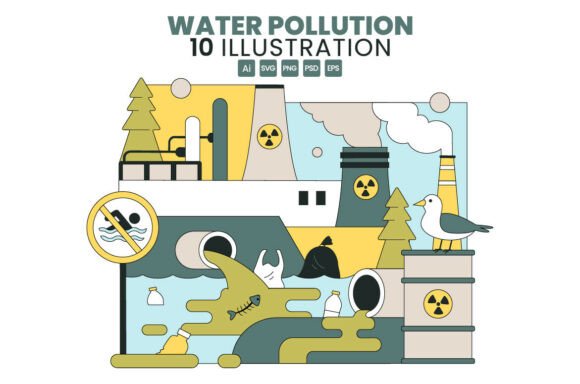
When I first loaded the 10 Water Pollution Vector Illustration set, I wasn’t looking for a pretty picture. I was hunting for a design that could carry a real message on a custom embroidered tote bag. A local eco-friendly shop wanted something bold, industrial, and slightly unsettling—something that would make people stop and think. That’s exactly what this collection delivered. The mood is immediate: a factory silhouette with smoke pouring from tall chimneys, a visual shorthand for an environmental disaster caused by industrial activity. It’s not subtle. It’s confrontational. And honestly, that’s what makes it work so well for a certain kind of handmade product.
First Impressions of the Visual Personality
The composition across the 10 illustrations varies, but the core theme stays consistent. Some versions feature a single dominating factory, others layer multiple smokestacks against a barren skyline, and a few include hints of polluted water below. The shapes are angular, with sharp contrasts between the building structures and the billowing clouds of smoke. There’s no mistaking the intent. As an embroidery designer, I’m immediately drawn to the strong silhouettes. A design like this won’t fade into the fabric. It’s meant to be seen, and that’s gold when you’re planning a product that needs to grab attention at a craft fair or in an Etsy shop listing.
What surprised me was how well the 10 Water Pollution Vector Illustration artwork balances stylized drama with realistic texture. The smoke isn’t just a soft blob. It has layered, wispy details that could translate beautifully into a mix of satin stitch and fill stitch if you’re willing to digitize with care. The factory buildings are blocky and geometric, which makes them a strong candidate for applique design or dense, clean embroidery columns. I can already picture a finished piece on a heavyweight canvas tote, stitched in charcoal and slate gray threads with a hint of orange for a toxic sunset effect.
The Mood Fit for Embroidery Projects
This isn’t a design you’d put on a baby blanket for a newborn gift. That’s not a flaw—it’s a clarity of purpose. The 10 Water Pollution Vector Illustration set leans into a serious, activist tone. It’s perfect for a reusable shopping bag, a protest patch, a hoodie for an environmental awareness event, or even a limited-edition pillow cover for a store that sells eco-conscious home goods. The mood is somber, angry, and urgent. When you stitch that onto a physical product, you’re not just decorating fabric. You’re making a statement. That kind of emotional weight can drastically increase the perceived value of a handmade item, as long as your target customer connects with the message.
How It Translates to Real Stitching
Let’s talk practicality. I’ve been burned before by vector art that looked spectacular on screen but turned into a muddy mess when stitches hit the fabric. The key with the 10 Water Pollution Vector Illustration is to be honest about scale. A few of the designs have intricate smoke wisps and small chimney details. If you try to embroider those at a 4-inch hoop size, you’ll end up with thread breaks, skipped stitches, and a frustrated afternoon. I’d recommend a minimum of 5x7 inches for the simpler compositions, and 8x8 or larger for the ones with layered smoke and multiple factory elements. Test on a similar fabric first. I always do a quick sew-out on a scrap of cotton canvas before I commit to a customer’s order.
Thread color selection can make or break this design. The factory outline can be stitched in a dark, almost black shade, but I’d lean toward a deep charcoal or a muted navy so it doesn’t feel too harsh. The smoke offers a chance to play with gradient effects. Use a blend of light gray, medium silver, and a faint off-white for the topmost curls. If you want to mimic the pollution in water, a few versions subtly imply ripples or chemical sludge. That’s where a dull olive green or a murky brown in a running stitch can add texture without overwhelming the main silhouette.
Fabric Choices and Problem Areas
I’ll be blunt: stretchy fabric is your enemy here. If you’re planning to stitch this onto a t-shirt or a thin jersey sweatshirt, you’ll need a heavy cutaway stabilizer, and even then, the dense fill areas might pull the fabric out of shape. The 10 Water Pollution Vector Illustration works best on sturdy, non-stretchy materials. Think thick canvas tote bags, denim jackets, structured caps, woven aprons, or linen pillow covers. I’ve done a similar industrial-themed patch on a baseball cap, and the curved surface made it tricky to align the tall chimneys without distortion. For a cap, pick one of the simpler single-factory illustrations and mirror the design beforehand so the smoke doesn’t wrap awkwardly around the crown.
Dark fabric can be a double-edged sword. The smoke will pop brilliantly on a black or charcoal background, but the factory building might blend in if you use the same dark thread. Add a subtle outline, or switch to a slightly lighter thread for the building, maybe a warm gray, to keep the structure visible. On light fabric, the entire design becomes a stark, graphic silhouette. That works well for a modern, minimalist look, but you’ll need to check your stitch density. Light-colored cotton or linen can show puckering more than dark fabric, so test, test, test.
Where This Design Shines in a Small Business
I can see the 10 Water Pollution Vector Illustration becoming a signature piece for a craft business that focuses on sustainability, activism, or educational messaging. For an Etsy seller, a listing featuring this design on a natural cotton tote bag, photographed in soft daylight with a recycled paper tag, could command a premium price. It’s not just a tote bag. It’s a conversation starter. When I imagine a handmade product like this, I think about the customer who buys it as a gift for a friend who’s passionate about climate justice. That emotional connection is what turns a one-time sale into a repeat buyer.
For an apparel decorator doing small-batch runs, this design on a heavyweight sweatshirt could be a statement piece. The style is unisex, and the subject matter doesn’t lean toward a specific gender or age group. It’s versatile. I’ve seen similar social-commentary embroidery sell out quickly at local markets, especially when the maker explains the inspiration behind the design. Just be transparent about the source. If you’re using the 10 Water Pollution Vector Illustration as a digital file to create your own embroidery file, check the licensing terms before you list anything for sale. Not all Graphics packs automatically include commercial embroidery rights. That’s a quick step many small shop owners overlook, and it can lead to trouble later.
Product Categories That Make Sense
Based on the visual weight and theme, I’d prioritize these products:
- Embroidered tote bags – The natural canvas texture and flat surface are ideal.
- Patches – A 3x3 or 4x4 patch with a single factory and smoke makes a great iron-on or sew-on accessory.
- Aprons – A sturdy cotton or denim apron with this design near the bottom corner feels surprisingly artistic.
- Pillow covers – A 16x16 linen cover with the design centered creates a gritty, modern home accent.
- Jacket backs – A larger version on a denim or canvas jacket is undeniably bold.
Avoid items that require frequent washing, like kitchen towels or baby clothes, unless you’re using a very soft backing and the design is simplified. The dense smoke areas could stiffen the fabric and make it less comfortable against the skin. For a personalized gift, you could add a small text line below the design—something like “Every Drop Counts”—but keep the lettering large enough to read cleanly. Tiny lettering next to such a heavy visual will just disappear.
Practical Embroidery Designer Notes
Before you even thread your needle, open the vector file and look at the line spacing. Some of the smoke details in the 10 Water Pollution Vector Illustration are delicate. If you digitize them as thin satin columns, they might not hold up on a textured fabric like a waffle weave towel. Consider converting the finest wisps into a light fill stitch or even skipping them to preserve the overall silhouette. I’ve done that before with a complicated skyline design, and the result was cleaner and more professional-looking.
Stabilizer choice is critical. For a tote bag, I use a medium-weight cutaway stabilizer and a topper if the fabric is napped or uneven. The factory chimneys are tall and straight, so any shifting during hooping will be obvious. Mark your centerlines carefully. I’ve learned to align the design with a fabric grid or a water-soluble pen mark to keep the chimneys perfectly vertical. Nothing ruins a strong environmental statement like a crooked smokestack.
Color contrast is another thing I test in black and white first. Convert a mockup to grayscale and see if the factory still reads against the smoke. If they blend together, add a subtle outline or adjust the smoke to a lighter shade. The 10 Water Pollution Vector Illustration is already high-contrast by nature, but thread colors can shift the perception. A dark navy smoke on a black hoodie might look like a shapeless blob. Test a sample on the exact garment color you’ll sell.
Commercial and Digital Product Considerations
If you’re planning to sell the resulting embroidery file as a digital product, you need to know the original Graphics license allows derivative works. Many Illustrations packs are sold for static use only, not for creating embroidery files that others can download and stitch. Read the terms. If the license is unclear, contact the seller. I’ve had to pass on a beautiful design before because I couldn’t get a clear answer on commercial embroidery rights. Don’t risk your Etsy seller account or your brand reputation over a licensing oversight.
For small business owners who offer physical finished products, the licensing is usually more straightforward, but double-check. The 10 Water Pollution Vector Illustration set is meant for posters, web banners, and brochures, so converting it to an embroidery file is a transformative use. That’s a legal gray area if not explicitly allowed. I always err on the side of caution and get permission. It’s a simple email that can save you a headache later.
Final Thoughts Before You Stitch
The 10 Water Pollution Vector Illustration collection is a powerful, moody set of graphics that can translate into memorable embroidery with the right approach. It’s not a beginner-friendly design if you’re cutting your teeth on a small hoop machine. The smoke details and tall vertical elements demand attention to digitizing, hooping, and fabric choice. But for an experienced maker looking to create a product with a strong voice, this is a gem. I’d start with a single-factory version on a tote bag, test it thoroughly, and then build a mini collection around the theme. The environmental message is timeless, and the visual impact is undeniable. Just remember to respect the original artwork’s purpose, and let your stitching enhance the story, not just decorate a surface.